
Fuel Monitoring System Kenya
Home / fuel-monitoring-system
Recent Blog



Upgrade Your Vehicle Security
- August 20, 2026
- GPS Tracking
- Joseph Muongi
Fuel Monitoring System Kenya: Cost, Features & How It Helps Control Fuel Loss in 2026
Fuel is one of the biggest operating expenses for trucks, buses, delivery vehicles, construction equipment and other commercial fleets in Kenya. When fuel usage is poorly monitored, small discrepancies across several vehicles can quickly become a significant monthly cost.
A fuel monitoring system in Kenya gives fleet owners better visibility over fuel levels, refuelling activity, possible fuel drainage and vehicle movement. Instead of depending entirely on fuel receipts, driver explanations or manual calculations, businesses can use vehicle data to understand what is happening inside the fuel tank.
At Finatrack Global Ltd, our GPS fuel monitoring solution is available from KES 35,000 installation, with a KES 1,000 monthly system fee.
For businesses with high fuel consumption, the important question is therefore not simply how much the system costs. It is how much uncontrolled fuel usage may already be costing the business.
What Is a Fuel Monitoring System?
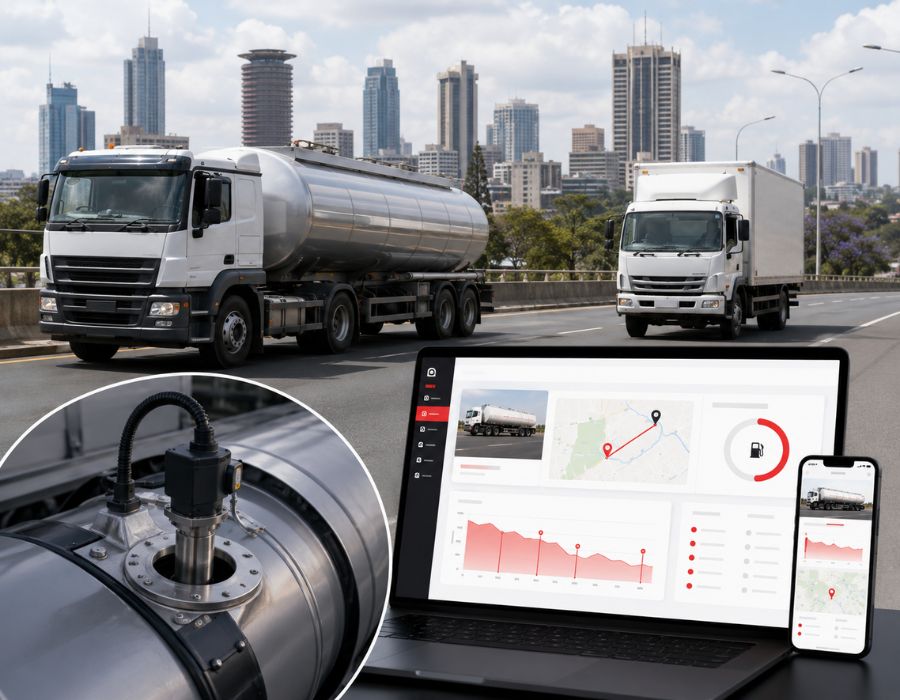
A vehicle fuel monitoring system combines fuel-level sensing technology with GPS tracking and fleet management software.
A fuel sensor is installed and calibrated against the vehicle’s fuel tank. Information from the sensor is transmitted through the tracking system and displayed on a monitoring platform where authorised users can review fuel activity alongside vehicle movement.
This allows a fleet manager to see more than where the vehicle is located. The system can provide a clearer picture of how the vehicle’s fuel level changes during trips, stops and refuelling events.
How Much Does a Fuel Monitoring System Cost in Kenya?
Fuel monitoring system prices in Kenya vary depending on the type of vehicle, fuel tank configuration, sensor technology, installation requirements and tracking platform.
At Finatrack Global Ltd, our current fuel monitoring solution is available from:
KES 35,000 Installation
The system also attracts a KES 1,000 monthly monitoring fee.
The final installation requirements may differ for trucks with multiple fuel tanks, unusually shaped tanks or specialised commercial equipment. It is therefore advisable to assess the vehicle before confirming the exact configuration required.
What Does the Finatrack Fuel Monitoring System Do?
The system is designed to help vehicle owners and fleet managers understand fuel activity more clearly while also providing GPS fleet visibility.
Depending on the vehicle configuration, the solution can help monitor fuel levels, identify refuelling events, highlight significant drops in fuel level and provide historical information that can be reviewed alongside vehicle location.
The objective is to replace guesswork with measurable vehicle data.
Real-Time Fuel Level Monitoring
A properly calibrated fuel sensor allows fleet managers to monitor changes in the amount of fuel inside a vehicle’s tank.
This can be particularly useful for trucks and commercial vehicles that consume large quantities of fuel and travel over long distances.
Instead of waiting until the end of a trip to compare receipts and kilometres travelled, management gains a more continuous view of fuel activity.
Refuelling Detection
When fuel is added to the vehicle, the monitoring system can record the resulting increase in tank level.
This information can help a fleet manager compare reported refuelling with what the vehicle data indicates.
For example, if a driver submits a receipt showing a large refuelling transaction but the monitored fuel level shows only a small increase, the discrepancy can be investigated rather than remaining unnoticed.
Fuel Drainage and Sudden Drop Detection
Unexpected reductions in fuel level can be one of the most valuable events for a fleet manager to investigate.
A significant fuel-level drop while a vehicle is parked may indicate drainage, leakage, sensor movement or another event requiring attention.
A fuel monitoring system does not automatically prove that theft has occurred. It provides data that helps management identify unusual events and investigate them more quickly.
GPS Tracking and Fuel Monitoring in One System
Fuel information becomes much more useful when it is connected to GPS location data.
If the system records an unusual fuel drop, management can also review where the vehicle was located when the event occurred.
This can help answer practical questions such as whether the vehicle was at a fuel station, customer location, yard, roadside stop or another area when the fuel change happened.
Combining GPS and fuel data therefore provides better context than monitoring either one independently.
Why Fuel Receipts Alone Are Not Enough
Fuel receipts are useful for accounting, but they do not always provide a complete picture of what happened to the fuel after purchase.
A receipt may show that KES 20,000 was spent at a filling station. It does not independently confirm how much fuel entered the vehicle’s tank or how that fuel was subsequently used.
Manual records also depend heavily on drivers, attendants and supervisors entering information accurately.
Fuel monitoring provides another source of operational data that can be compared against receipts, mileage and driver reports.
How Can Fuel Monitoring Help Reduce Fuel Loss?
The biggest advantage of fuel monitoring is visibility.
When drivers and fleet managers know that fuel activity is being recorded, there is greater accountability around refuelling and vehicle use.
Management can identify repeated patterns, investigate unexplained changes and compare performance across vehicles.
The system is therefore not simply a theft-detection device. It can become part of a wider fuel-control process.
How Much Could Uncontrolled Fuel Usage Be Costing Your Fleet?
Small fuel losses can become expensive when multiplied across several vehicles.
Consider a fleet of 10 commercial vehicles.
If unexplained fuel usage averages only KES 3,000 per vehicle each week, that represents around KES 30,000 per week across the fleet.
Over four weeks, the figure reaches approximately KES 120,000.
The example does not mean every fleet is losing this amount. It demonstrates why businesses with high fuel expenditure should measure losses instead of assuming they are insignificant.
Which Businesses Need Fuel Monitoring Most?
Fuel monitoring is particularly useful for businesses where vehicles consume large quantities of fuel or where management has limited direct visibility over drivers.
Transport and logistics companies are obvious candidates because trucks may travel hundreds of kilometres away from the office while carrying significant quantities of diesel.
Construction businesses can also benefit because trucks, generators and heavy equipment may operate at different project sites where manual supervision is difficult.
Distribution companies, school transport operators, passenger transport businesses, agricultural fleets and organisations running multiple field vehicles may also benefit depending on their fuel expenditure.
Fuel Monitoring for Trucks in Kenya
Heavy commercial vehicles are among the strongest use cases for fuel monitoring.
A long-distance truck can consume substantial quantities of diesel every month. Even a relatively small percentage of unexplained fuel usage can therefore translate into a meaningful financial loss.
Truck owners can use fuel monitoring alongside GPS tracking to review fuel activity, routes, stop locations and vehicle utilisation.
For larger fleets, this provides management with a more systematic way of controlling operating costs.
Fuel Monitoring for Logistics Companies
Logistics businesses depend on predictable vehicle operating costs.
Unexpected increases in fuel consumption can reduce profit margins, especially when transport contracts are priced using assumptions about distance and fuel usage.
A fuel monitoring system can help logistics managers compare vehicles, routes and fuel activity more accurately.
When combined with trip history and fleet reports, the information can also support better operational decisions.
Fuel Monitoring for Construction Vehicles
Construction vehicles frequently operate away from the company’s main office.
Tipper trucks, water bowsers, excavators, generators and other equipment can consume significant quantities of fuel at remote project sites.
Where suitable sensor installations are possible, fuel monitoring can provide management with additional visibility over how fuel is being used across different sites and equipment.
This can be especially valuable where several employees, contractors or operators interact with the same equipment.
Can Fuel Monitoring Measure Fuel Consumption?
A fuel monitoring system can provide data that helps businesses evaluate fuel usage, but accurate consumption analysis requires proper calibration and interpretation.
The most useful analysis usually combines fuel level information with trip distance, vehicle activity and operating conditions.
A heavily loaded truck climbing steep terrain will naturally consume fuel differently from an empty vehicle travelling on a flat highway.
Fuel-monitoring data should therefore be used as a management tool rather than interpreted without context.
Why Calibration Is Important
Installing a fuel sensor is only part of the process.
The system must be calibrated according to the characteristics of the fuel tank.
Vehicle tanks vary in size and shape, and the relationship between fuel height and actual litres is not always perfectly linear.
Professional calibration helps the monitoring platform convert sensor measurements into more meaningful fuel information.
Poor calibration can produce misleading results, which is why installation quality matters when selecting a fuel monitoring company.
Can Fuel Monitoring Detect Every Fuel Theft?
No fuel monitoring system should be marketed as completely infallible.
Sensors measure changes inside the fuel tank, and unusual changes can indicate events that deserve investigation.
However, a fuel drop may sometimes be caused by legitimate consumption, vehicle movement, tank geometry, sensor conditions, leakage or other factors.
The best results come when fuel monitoring is combined with proper fleet procedures, driver accountability and management review.
Fuel Monitoring vs GPS Tracking: What Is the Difference?
Standard GPS tracking focuses primarily on vehicle location and movement.
It can tell you where the vehicle is, where it has travelled and how it is being used.
Fuel monitoring adds another layer by measuring activity within the fuel tank.
For fleet operators, combining the two provides a more complete view of the vehicle because management can compare fuel activity with actual movements.
Should You Install GPS Tracking and Fuel Monitoring Together?
For commercial fleets with significant fuel expenditure, combining the systems can make good business sense.
GPS tracking can provide real-time vehicle location, trip history, geofence alerts and speed information.
Fuel monitoring adds visibility over refuelling, tank levels and unusual fuel changes.
Together, the information helps management understand both where the vehicle went and what happened to its fuel along the way.
What Should You Look for in a Fuel Monitoring Company in Kenya?
Do not choose a supplier based only on the sensor price.
Ask whether the company provides professional installation and calibration.
Find out whether the system integrates fuel monitoring with GPS tracking.
Ask whether you can review historical fuel activity and whether technical support is available when readings appear unusual.
You should also understand all ongoing system charges before installation.
A fuel monitoring system is most useful when the company behind it can support the technology after the installer leaves.
Questions to Ask Before Installing a Fuel Monitoring System
Before purchasing a system, explain your fleet operations clearly to the provider.
Ask whether your vehicle and fuel tank are suitable for the proposed sensor.
Confirm the installation price and recurring system fees.
Find out whether the solution can identify refuelling and sudden fuel drops.
Ask whether GPS location information will be available alongside fuel data.
You should also understand how calibration is carried out and what happens if the sensor requires inspection later.
Is a Fuel Monitoring System Worth KES 35,000?
For a private vehicle with relatively low fuel expenditure, an advanced fuel monitoring system may not always be necessary.
For a truck or commercial fleet consuming tens or hundreds of thousands of shillings in fuel every month, the calculation is very different.
The value of the system depends on how much fuel the business uses, how much control it currently has and whether better information can help reduce unnecessary losses.
Rather than viewing the KES 35,000 installation cost in isolation, businesses should compare it with their monthly fuel expenditure and the cost of unexplained fuel discrepancies.
Fuel Monitoring and Driver Accountability
Fuel management works best when drivers understand the company’s procedures.
A tracking system should not replace communication and proper fleet management.
Instead, it provides objective information that can support discussions about refuelling, routes and fuel usage.
Where unusual events occur repeatedly, management has data that can be reviewed rather than relying only on conflicting explanations.
Can Fuel Monitoring Help Calculate Cost Per Kilometre?
Yes, when combined with other fleet information.
Knowing how much fuel a vehicle consumes and how far it travels can help businesses estimate fuel cost per kilometre.
This metric is useful when pricing transport services, comparing vehicles and identifying changes in operating efficiency.
A more complete cost-per-kilometre calculation should also include tyres, maintenance, insurance, driver costs, depreciation and other expenses.
Fuel monitoring provides an important part of that calculation because fuel is often one of the largest variable fleet costs.
Frequently Asked Questions About Fuel Monitoring Systems in Kenya
How much does a fuel monitoring system cost in Kenya?
Prices depend on the vehicle, sensor configuration and service provider. Finatrack Global Ltd currently offers its GPS fuel monitoring solution from KES 35,000 installation, with a KES 1,000 monthly system fee.
Can a fuel sensor detect fuel theft?
A fuel sensor can help identify unexpected drops in fuel level that may require investigation. An unusual drop does not automatically prove theft, but it provides useful data for fleet management.
Can I monitor fuel from my phone?
Depending on the monitoring platform and system configuration, authorised users can access vehicle and fuel information remotely through compatible tracking platforms.
Does fuel monitoring include GPS tracking?
Finatrack’s fuel monitoring solution integrates fuel information with vehicle tracking, allowing fleet managers to relate fuel events to vehicle location and movement.
Can fuel monitoring detect refuelling?
A calibrated fuel monitoring system can identify increases in tank level that may correspond to refuelling events.
Can fuel monitoring work on trucks?
Yes. Trucks are among the most common applications for fuel monitoring because of their high fuel consumption and long-distance operations.
Can one truck require more than one fuel sensor?
Yes. Some trucks have multiple tanks or tank configurations that may require more than one sensor. The vehicle should be assessed before installation to determine the appropriate setup.
Is fuel monitoring suitable for small fleets?
Yes, particularly where fuel expenditure is significant. Even a business with only a few trucks can benefit if better fuel control produces meaningful savings.
Where Can I Install a Fuel Monitoring System in Nairobi?
Finatrack Global Ltd provides professional GPS tracking and fuel monitoring installations for commercial vehicles and fleets in Kenya.
Our Nairobi office is located at:
Vision Plaza, 1st Floor, Office 2, Mombasa Road, Nairobi.
Customers can contact our team to discuss the vehicle type, tank configuration and operational requirements before installation.
Get a Fuel Monitoring System for Your Fleet
You cannot effectively control what you cannot measure.
If your business spends heavily on fuel but still depends mainly on receipts, driver reports and manual records, a fuel monitoring system can provide another level of visibility.
Finatrack Global Ltd combines GPS tracking with fuel-level monitoring to help businesses understand refuelling, vehicle movement and unusual fuel activity more clearly.
Fuel Monitoring System — From KES 35,000 Installation
Monthly system fee: KES 1,000
Suitable for trucks, commercial vehicles and fleet applications.
Monitor fuel levels.
Review refuelling activity.
Identify unusual fuel drops.
Connect fuel events with GPS location.
Improve fleet visibility and accountability.
Call or WhatsApp: 0723 645 810
Visit: Vision Plaza, 1st Floor, Office 2, Mombasa Road, Nairobi
Website: finatrack.co.ke
Protect Your Fuel. Understand Your Fleet. Control Your Costs.
Choose Finatrack Global Ltd for professional GPS tracking, fuel monitoring and fleet telematics solutions in Kenya.