
Fleet Management System Kenya: Cost & Features 2026
Home / Fleet management
Recent Blog
Upgrade Your Vehicle Security
- August 20, 2026
- GPS Tracking
- Joseph Muongi
Fleet Management System Kenya: Features, Cost & Benefits for Businesses in 2026
Managing several vehicles becomes difficult when your main source of information is phone calls, driver reports, fuel receipts and manual logbooks.
Where is each vehicle right now? Which driver is speeding? Which vehicles are being used after working hours? Are drivers following authorised routes? Why is one truck consuming significantly more fuel than another?
A modern fleet management system in Kenya helps businesses answer these questions using vehicle data rather than guesswork.
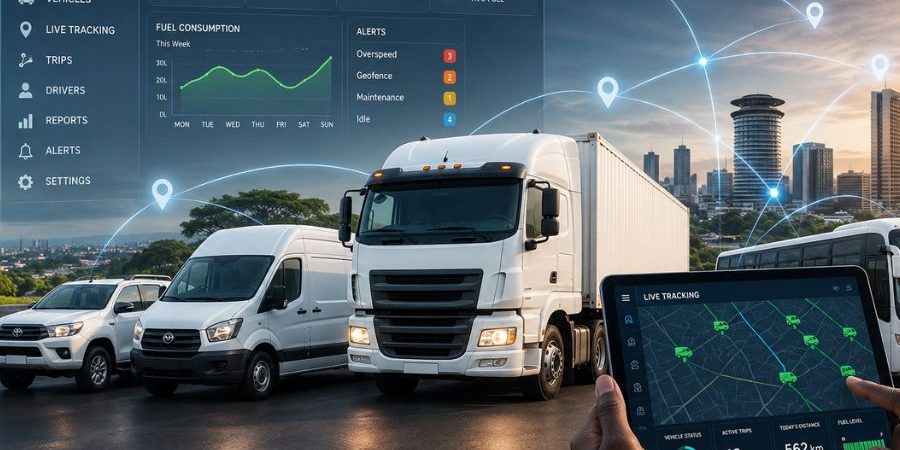
By combining GPS tracking, trip history, alerts, driver monitoring, fuel management and reporting, fleet managers can gain better visibility over vehicles operating in Nairobi and across Kenya.
At Finatrack Global Ltd, we provide GPS tracking and telematics solutions for businesses that want to protect their vehicles, improve fleet visibility and make better operational decisions.
What Is a Fleet Management System?
A fleet management system is a combination of vehicle tracking hardware and software that allows a business to monitor and manage multiple vehicles from a central platform.
GPS tracking devices installed in the vehicles send information to the fleet management platform.
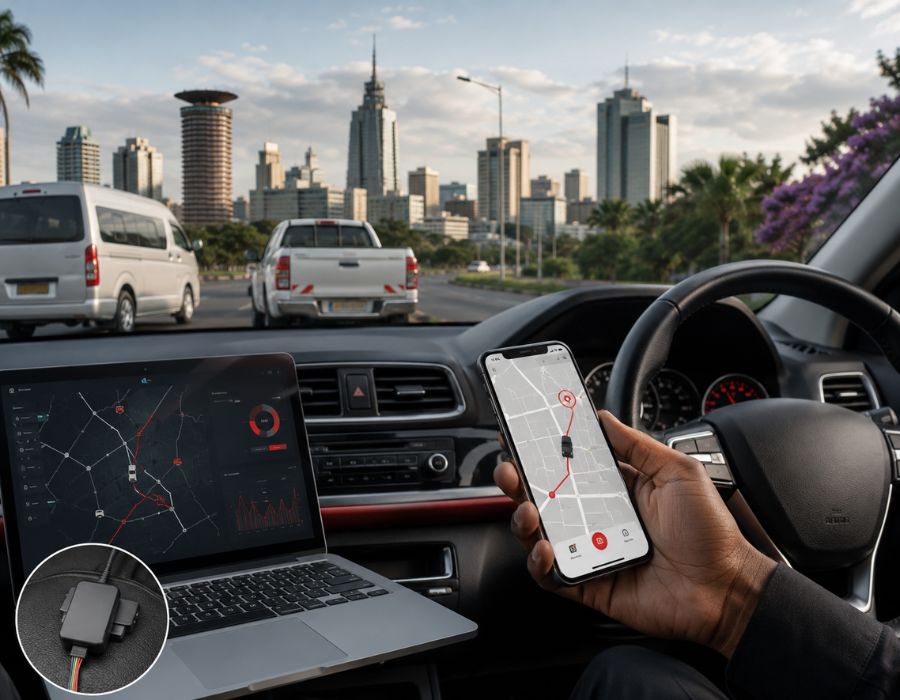
Authorised managers can then use a smartphone or computer to monitor vehicle locations, journeys and selected operational events.
Depending on the solution installed, a fleet management system can provide information such as:
Real-time vehicle location.
Trip history.
Vehicle movement.
Ignition status.
Geofence activity.
Overspeed events.
Driver behaviour.
Vehicle utilisation.
Fuel activity.
Video telematics.
Fleet reports.
Instead of treating each vehicle independently, management gains a central view of the entire fleet.
What Does a Fleet Management System Do?
A fleet management system helps a business understand what is happening with its vehicles when management cannot physically see them.
Consider a company operating 20 delivery vehicles.
Without telematics, the manager may need to call drivers whenever a customer wants to know where a delivery is.
If one vehicle takes an unauthorised detour, management may only discover it later.
If another vehicle is being driven excessively fast, there may be no objective record.
A fleet management platform changes this by making vehicle activity visible remotely.
The objective is not simply to put dots on a map.
The real value comes from turning vehicle activity into information that management can use.
Real-Time GPS Fleet Tracking
Real-time GPS tracking is the foundation of most fleet management systems.
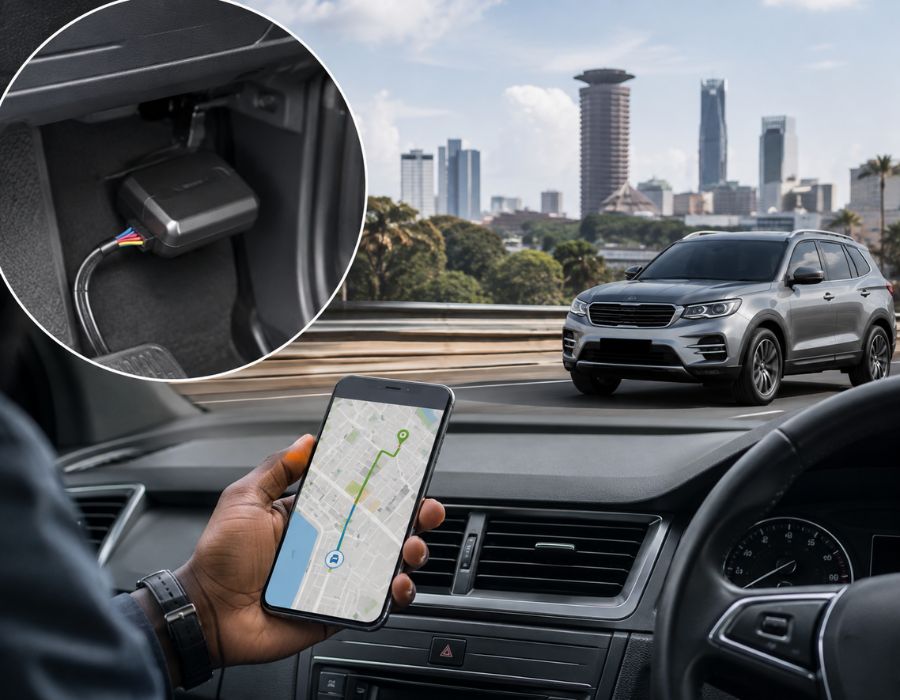
It allows an authorised user to view the current location of vehicles through a tracking platform.
This can be useful when dispatching vehicles, responding to customer enquiries or confirming whether drivers have reached their destinations.
For businesses with vehicles operating across Nairobi or travelling between counties, real-time visibility reduces dependence on repeatedly calling drivers for location updates.
Monitor Your Entire Fleet From One Platform
Managing ten, twenty or fifty trackers independently would quickly become inefficient.
A fleet management system brings multiple vehicles into a central account.
A fleet manager can therefore see which vehicles are moving, parked or operating in particular locations without switching between different systems.
This becomes increasingly valuable as a business grows.
A company that starts with three vehicles may eventually operate twenty.
The fleet management platform should be capable of growing with the organisation.
Trip History and Route Playback
Knowing where a vehicle is right now is useful.
Knowing where it has been can be even more valuable.
Trip history allows managers to review previous vehicle journeys.
This can help answer questions such as:
Which route did the driver take?
When did the vehicle leave?
What time did it arrive?
Where did it stop?
How long did the stop take?
Was the vehicle used after working hours?
Did the driver make an unauthorised trip?
Historical vehicle data can be particularly useful when investigating customer complaints, internal disputes or unexpected operating costs.
Geofencing for Better Fleet Control
A geofence is a virtual boundary created around a geographical location.
A business could create geofences around:
Its office.
Warehouse.
Customer premises.
Construction site.
Delivery zone.
Parking yard.
Restricted area.
When a monitored vehicle enters or leaves the configured area, the system can record or generate the relevant event depending on the platform settings.
For businesses with vehicles assigned to specific operating areas, geofencing provides another level of fleet visibility.
Overspeed Monitoring
Speeding creates both safety and business risks.
An overspeeding vehicle may be more likely to be involved in an accident, consume fuel inefficiently or expose the company to reputational problems.
GPS fleet tracking can help managers identify when configured speed limits are exceeded.
Instead of relying entirely on complaints or driver explanations, management can review recorded vehicle information.
Repeated speeding patterns can then be addressed through driver coaching and internal fleet policies.
Monitor Unauthorised Vehicle Use
Company vehicles can become expensive when they are regularly used for journeys unrelated to company business.
A few kilometres may not appear significant.
Repeated across several vehicles over an entire month, however, unauthorised trips can contribute to additional fuel consumption, maintenance and depreciation.
Trip history, ignition information and after-hours alerts can help fleet managers identify unusual vehicle usage.
The objective is not to watch employees unnecessarily.
It is to ensure that company vehicles are being operated according to agreed business policies.
Driver Behaviour Monitoring
The way a vehicle is driven affects more than road safety.
Aggressive driving can contribute to higher fuel consumption, tyre wear and mechanical stress.
Depending on the telematics solution installed, businesses can monitor indicators such as:
Overspeeding.
Harsh acceleration.
Harsh braking.
Excessive idling.
Driving times.
Route behaviour.
Repeated patterns can help management identify drivers who may require additional coaching.
Fleet telematics therefore provides an opportunity to improve behaviour using measurable information rather than assumptions.
Fuel Monitoring for Commercial Fleets
For fleets with significant fuel expenditure, GPS location alone may not provide enough information.
Fuel monitoring can add another important layer.
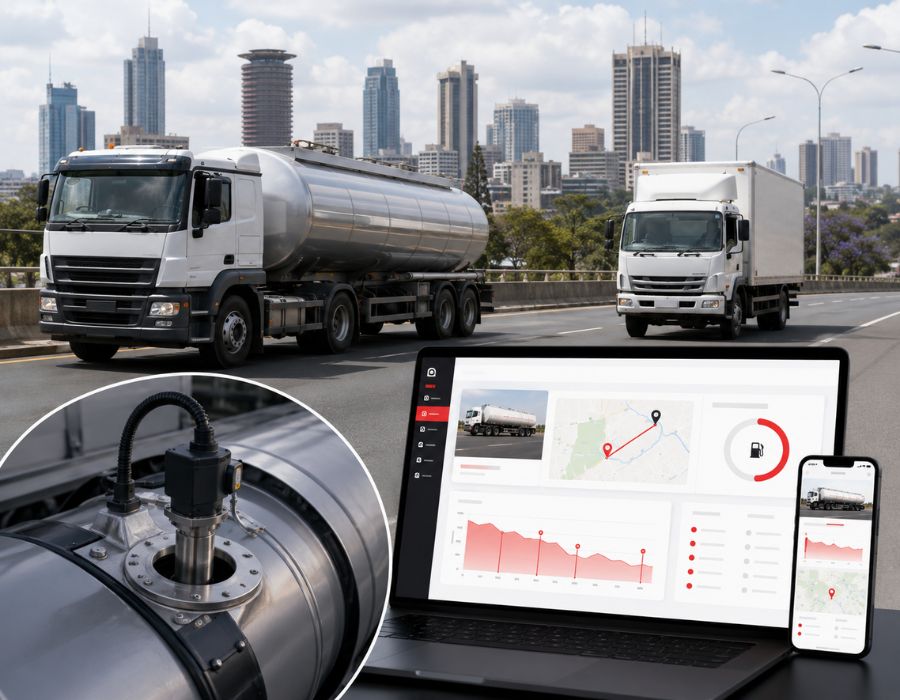
Finatrack’s fuel monitoring solution can combine fuel-level information with vehicle tracking.
Depending on the installation and tank configuration, businesses can monitor fuel levels, identify refuelling activity and investigate significant changes in tank levels.
Finatrack’s GPS fuel monitoring solution is available from:
KES 35,000 Installation
Monthly system fee: KES 1,000
For truck fleets and other high-consumption commercial vehicles, fuel monitoring can be especially valuable because even relatively small unexplained fuel losses can become substantial when multiplied across several vehicles.
Why Combine GPS Tracking With Fuel Monitoring?
GPS tracking tells you where the vehicle was.
Fuel monitoring can help you understand what was happening to the fuel.
Combining the two provides useful context.
For example, if the system records a significant fuel-level reduction, management can review the location and vehicle activity around the event.
Was the truck at a petrol station?
Was it parked on the roadside?
Was it at the company’s yard?
Was the vehicle moving?
This does not automatically prove that fuel theft occurred, but it provides management with better information for investigation.
AI Dashcams and Video Telematics
Some fleets require more than location and fuel data.
Video telematics can provide visual context around driving events.
An AI-enabled dashcam can combine GPS information with road-facing and driver-monitoring cameras.
Depending on the system, technologies such as ADAS and DMS can help identify certain road and driver risks.
Video can also be useful when reviewing accidents, disputes or incidents involving company vehicles.
Finatrack offers AI dashcam tracking solutions from:
KES 35,000
For businesses operating high-value vehicles, trucks, passenger transport or company fleets, video telematics can become an important extension of the fleet management system.
Fleet Management for Trucks in Kenya
Truck fleets are among the businesses that can gain the most from telematics.
A truck may travel hundreds of kilometres away from the company’s main office while consuming significant amounts of fuel and carrying valuable cargo.
Fleet managers need visibility without being physically present.
A truck fleet management system can help monitor:
Current truck location.
Routes travelled.
Stops.
Speeding.
Trip duration.
Unauthorised movement.
Fuel activity.
Driver behaviour.
Vehicle utilisation.
Combining GPS tracking, fuel monitoring and AI dashcams can provide a much more complete view of truck operations than basic location tracking alone.
Fleet Management for Logistics Companies
Logistics businesses depend on timing.
A late delivery can affect both the logistics company and its customer.
GPS fleet management can help dispatch teams know where vehicles are and identify which vehicle may be closest to a new assignment.
Trip history can help businesses review delivery routes and investigate delays.
Geofencing can also provide useful information about arrival and departure from customer locations.
Over time, this information can help managers identify inefficiencies that would otherwise be difficult to see.
Fleet Management for Delivery Businesses
Businesses operating vans, motorcycles or delivery vehicles can use fleet tracking to improve dispatch visibility.
A manager can check vehicle locations without repeatedly calling every driver.
Historical routes can also help verify whether deliveries were made within the expected operating areas.
Where motorcycles are part of the fleet, Finatrack can also provide dedicated motorcycle GPS tracking solutions.
Fleet Management for Construction Companies
Construction businesses often operate vehicles across several project sites.
These may include trucks, pickups, company cars, service vehicles and other mobile equipment.
GPS tracking allows management to see which vehicles are at different sites and how they are being used.
Fuel monitoring may also be useful for vehicles or equipment with high fuel consumption.
This is particularly valuable when assets operate far away from the main office.
Fleet Management for Corporate Vehicles
A company does not need to operate trucks to benefit from fleet management.
Businesses with sales vehicles, staff transport, executive vehicles and field service cars can also use GPS fleet tracking.
Management can monitor routes, vehicle utilisation, after-hours activity and overall movement.
This can help businesses understand whether their existing fleet is being used efficiently before purchasing additional vehicles.
Fleet Management for SACCOs and Passenger Transport
Passenger transport businesses may need greater visibility over where vehicles operate and how they are driven.
GPS tracking can help monitor routes, speeding and vehicle activity.
More advanced configurations may include driver monitoring and video telematics.
The specific fleet management solution should be designed around the operator’s vehicle types, routes and management objectives.
How Fleet Management Can Help Reduce Operating Costs
A fleet management system does not reduce costs automatically.
Its value comes from the decisions a business makes using the information it provides.
Consider excessive idling.
If drivers leave engines running unnecessarily, fuel is being consumed while the vehicle generates little productive movement.
Consider unauthorised trips.
Additional kilometres increase fuel consumption and contribute to tyre wear and maintenance requirements.
Consider speeding.
Aggressive driving can affect both safety and operating efficiency.
Fleet information helps managers identify these patterns.
Management can then address the causes through policies, driver coaching, route planning or operational changes.
Can Fleet Management Help With Customer Service?
Yes.
Vehicle visibility is not only useful internally.
Imagine a customer calling to ask:
“Where is my delivery?”
Without tracking, the office may have to call the driver and wait for an update.
With fleet visibility, an authorised staff member may be able to check the vehicle’s location immediately.
That can improve communication with customers and reduce unnecessary calls between office staff and drivers.
Can Fleet Tracking Provide Proof of Vehicle Movement?
Trip history can provide useful records showing when and where a tracked vehicle travelled.
This can be useful where there is disagreement about whether a vehicle visited a certain area or followed a particular route.
However, businesses should maintain appropriate operational documentation where formal proof of delivery, contractual evidence or regulatory records are required.
GPS tracking information should complement good business processes rather than replace them entirely.
Fleet Management System vs Basic GPS Tracker
A basic GPS tracker primarily helps you identify the location of an individual vehicle.
A fleet management system goes further.
It brings several vehicles together and helps management analyse how those vehicles are being operated.
The difference can be thought of this way:
A GPS tracker answers:
“Where is my vehicle?”
A fleet management system should help answer:
“What is happening across my fleet, and what should I do about it?”
That difference becomes increasingly important as the number of vehicles grows.
How Much Does a Fleet Management System Cost in Kenya?
There is no single fleet management system price that applies to every business.
The total cost depends on factors such as:
Number of vehicles.
Type of GPS tracker required.
Vehicle types.
Fuel monitoring requirements.
Dashcam requirements.
Driver monitoring.
Number of fuel tanks.
Installation complexity.
Software requirements.
Reporting requirements.
Ongoing system services.
A business requiring standard GPS fleet tracking will have different costs from a logistics company that requires GPS tracking, fuel monitoring and AI dashcams across a large truck fleet.
At Finatrack, standard wired GPS vehicle tracking is available at:
KES 15,000 Per Vehicle
For more advanced fleet deployments, we recommend discussing the fleet with our team so that the required solution can be properly configured and quoted.
Should You Choose a Fleet System Based on Price Alone?
No.
The cheapest system is not necessarily the most economical solution.
A tracking system becomes expensive if the data is unreliable, the installation is poor or the business cannot get technical support when something goes wrong.
When comparing fleet management systems in Kenya, consider the complete solution.
Ask what hardware is being installed.
Ask what information the software provides.
Ask about installation.
Ask about recurring charges.
Ask about technical support.
Ask how easily additional vehicles can be added.
Most importantly, ask whether the system actually solves the operational problems your business is experiencing.
What Should a Good Fleet Management System Include?
The ideal features depend on the business, but a useful system should generally provide clear vehicle visibility.
Businesses should consider features such as:
Real-time GPS tracking.
Multi-vehicle dashboard.
Trip history.
Route playback.
Ignition information.
Geofencing.
Overspeed alerts.
Driver behaviour monitoring.
Vehicle activity reports.
Mobile and web access.
Fuel monitoring integration.
Video telematics integration.
Technical support.
Not every business needs every feature.
The right system should therefore be configured around the fleet rather than loaded with unnecessary functions that nobody uses.
How to Choose a Fleet Management Company in Kenya
Choosing the technology is only part of the decision.
You also need to choose the company behind it.
Look for a provider that understands both installation and ongoing fleet management.
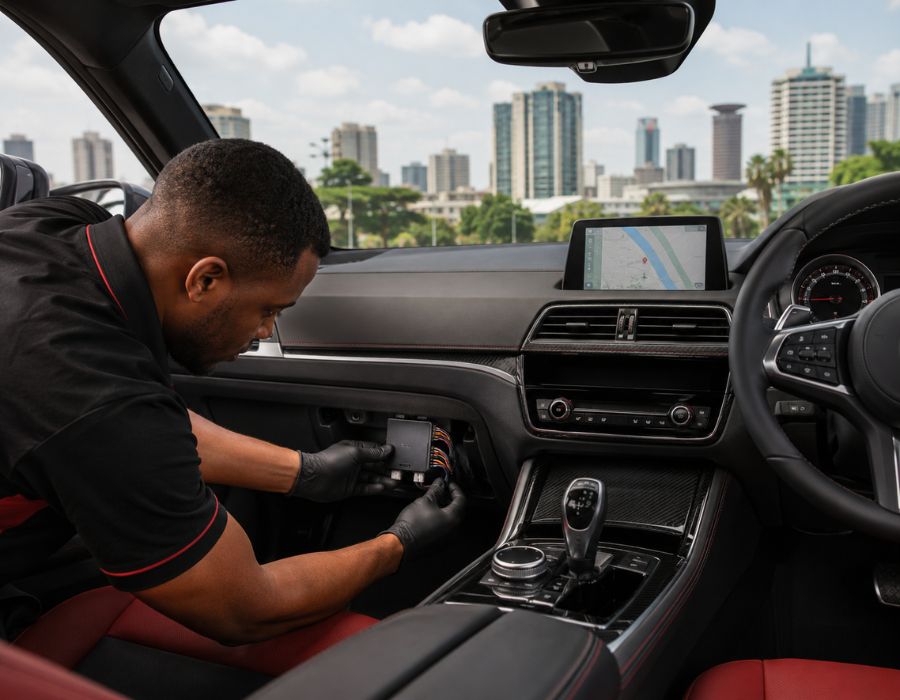
Ask whether installation is carried out professionally.
Confirm how the tracking platform works before committing your fleet.
Find out how technical issues are handled.
Ask whether the provider can support additional services such as fuel monitoring and video telematics as your business grows.
A long-term fleet technology partner can be more valuable than purchasing individual devices from several unrelated suppliers.
Why Choose Finatrack Global Ltd for Fleet Management?
Finatrack Global Ltd provides vehicle security, GPS tracking and telematics solutions for both individual vehicle owners and commercial fleets in Kenya.
Our approach is based on helping businesses gain greater visibility and control over their vehicles.
Depending on the fleet’s requirements, we can combine technologies including:
GPS fleet tracking.
Fuel monitoring.
Driver monitoring.
AI dashcams.
Vehicle security systems.
Motorcycle tracking.
Wireless tracking.
Tracking tags.
Mobile surveillance solutions.
This allows businesses to build a fleet management solution around their actual operational risks rather than relying on a single basic tracker.
Start With a Fleet Assessment
Before installing trackers across an entire fleet, it is useful to identify the actual problems you want to solve.
For example:
Are you primarily concerned about vehicle theft?
Do you have unexplained fuel losses?
Are drivers using vehicles after hours?
Do you need better route visibility?
Are customers frequently asking where deliveries are?
Are speeding and driver behaviour major concerns?
Do you need video evidence when accidents occur?
Once these priorities are clear, it becomes easier to select the right combination of GPS tracking, fuel monitoring and video telematics.
Frequently Asked Questions About Fleet Management Systems in Kenya
What is the best fleet management system in Kenya?
The best system depends on your fleet size, vehicle types and operational challenges. Businesses should look for reliable GPS tracking, trip history, useful alerts, reporting, professional installation and technical support. Fleets with high fuel expenditure may also require fuel monitoring, while fleets with significant road-safety risks may benefit from video telematics.
How much does a fleet management system cost in Kenya?
The cost depends on the number of vehicles and features required. Finatrack’s standard wired GPS tracking solution costs KES 15,000 per vehicle. Fuel monitoring and AI dashcam solutions are available separately for businesses requiring more advanced fleet visibility.
Can I track all my company vehicles from one account?
Fleet tracking systems can allow authorised users to monitor multiple vehicles through a central platform, depending on the system configuration.
Can a fleet management system monitor fuel?
Yes. A suitable fuel monitoring system can be integrated with GPS tracking to provide information about fuel levels, refuelling events and significant fuel-level changes.
Can fleet management systems monitor drivers?
Depending on the installed technology, fleet systems can provide information relating to driving behaviour such as speeding, harsh driving and vehicle usage. AI dashcam solutions can provide additional driver-monitoring capabilities.
Can I monitor my fleet from my phone?
Yes. Modern GPS tracking platforms can allow authorised users to access vehicle information through compatible smartphones and computers.
Is fleet tracking suitable for small businesses?
Yes. A business does not need dozens of vehicles to benefit from fleet tracking. Even a company operating three or five vehicles may benefit where vehicle security, fuel expenditure, route visibility or driver accountability are important.
Can GPS tracking reduce fuel costs?
GPS tracking alone does not reduce fuel consumption, but it can provide information that helps businesses identify behaviours such as unnecessary journeys, excessive idling or inefficient vehicle usage. Dedicated fuel monitoring provides additional visibility into fuel activity.
Can fleet tracking work outside Nairobi?
GPS fleet tracking can be used for vehicles travelling across Kenya, subject to the communication and GPS conditions required by the tracking system.
Where can I get a fleet management system in Nairobi?
Finatrack Global Ltd provides professional GPS tracking, fuel monitoring and fleet telematics solutions from Vision Plaza, 1st Floor, Office 2, Mombasa Road, Nairobi.
Get a Fleet Management System for Your Business
You should not need to call every driver to understand what is happening across your fleet.
The right technology can give management better visibility over vehicle locations, routes, driver activity, fuel usage and operational events from one platform.
Whether your business operates a few company vehicles or a large commercial fleet, Finatrack Global Ltd can help you build a solution around your actual requirements.
GPS Fleet Tracking — From KES 15,000 Per Vehicle
Available solutions include:
Real-time GPS tracking.
Multi-vehicle monitoring.
Trip history and route playback.
Ignition alerts.
Geofencing.
Overspeed alerts.
Vehicle activity reports.
Driver monitoring.
Fuel monitoring.
AI dashcams.
Remote vehicle security capabilities.
Call or WhatsApp: 0723 645 810
Visit: Vision Plaza, 1st Floor, Office 2, Mombasa Road, Nairobi
Website: finatrack.co.ke
See Your Fleet. Understand Your Operations. Stay in Control.
Choose Finatrack Global Ltd for professional fleet management, GPS tracking and telematics solutions in Kenya.